India wants AI to come to the data: what MeitY's DEPA for AI Training actually proposes
The draft framework, built with iSPIRT, would let startups train models on hospital, bank and government data inside sealed compute rooms. It is not binding yet, and the hard questions on payment and liability are still open.
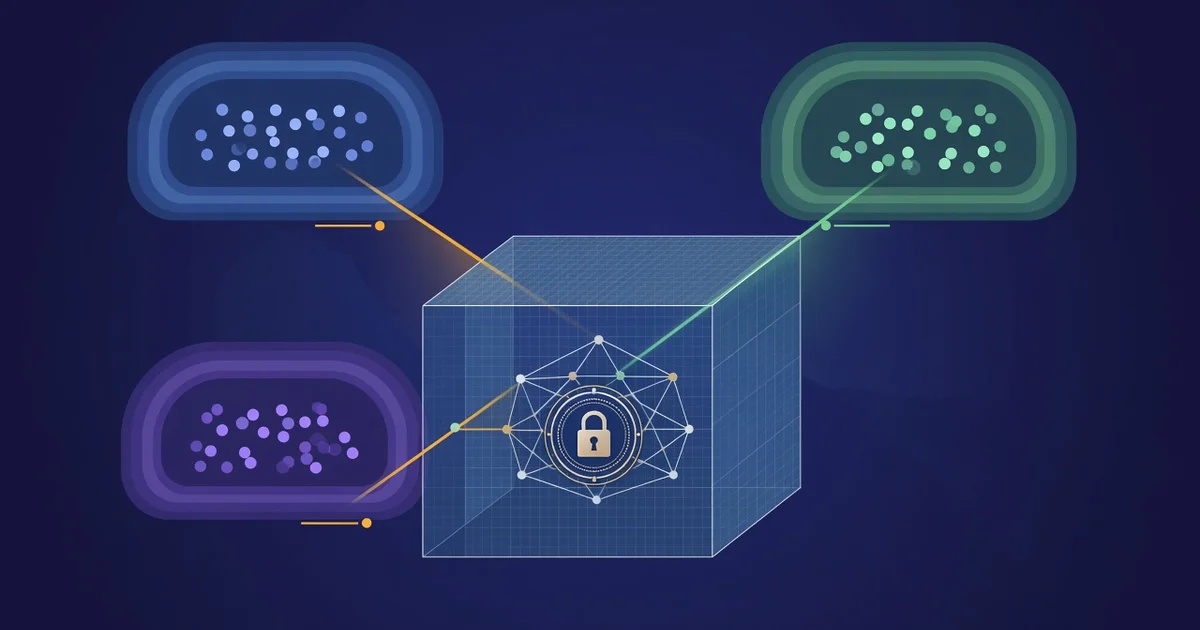
India's IT ministry has put a name and a blueprint to an idea that has floated around its digital public infrastructure circles for years: train AI models on sensitive institutional data without ever handing that data over. MeitY Secretary S Krishnan unveiled the DEPA for AI Training handbook at a roundtable in Bengaluru on October 30. The draft framework was prepared with the iSPIRT Foundation, the volunteer think tank that worked on UPI and India Stack.
The pitch is ambitious. The handbook says the approach could unlock $500 billion in AI driven value for India's GDP by 2030, according to Business Standard. The more useful question for founders, banks and hospitals is what it would actually ask them to do.
From consent for one person to bulk training data
DEPA, the Data Empowerment and Protection Architecture, is not new. NITI Aayog introduced it in 2020 as a way for citizens to share their data with consent, and it already powers the Account Aggregator network in finance. That version deals with one person's data moving for one decision, such as a loan.
The new framework targets a different problem: bulk, de-identified data used to build models in the first place. Business Standard reports that the handbook keeps the two apart, calling the existing consent flow DEPA Inference and the new layer DEPA Training. Mint's report summed up the central idea, as described by a senior official at the launch, as bringing models to the data rather than moving data to researchers.
How the sealed room is supposed to work
The architecture rests on four pillars: a data exchange platform, electronic contracts, a secure data environment and differential privacy. Training data providers such as hospitals, banks and public agencies would register datasets on the exchange after anonymising and encrypting them, and tag them with metadata and cryptographic identifiers so they can be traced, according to Inc42. Training data consumers, which include startups, researchers and enterprises, would request a dataset for a stated use case. An electronic contract system checks each request against data sharing policies before access is granted.
Training then happens inside the secure environment, which Mint describes as a sealed room that runs only what an authorised digital contract permits. Under the launch presentation, no one can see the data inside, not even the operator of the system. The developer sends in a model and gets back a trained model, or in cases such as a loan check, just the decision. Intermediaries called data collabs would aggregate and standardise data across sources.
Business Standard reports two operating options in the draft. In one, providers anonymise the data themselves and consumers may download it or use the secure environment. In the other, the exchange platform handles anonymisation and encryption, and consumers can only work inside the secure environment. The first is simpler to run. The second is the one that actually delivers on the promise that raw data never leaves its owner's control.
Checks after training, not just before
The framework does not stop at data access. Trained models would have to pass independent checks for bias, fairness, security, safety and explainability before they are approved for pilot deployment, and consumers would stay subject to monitoring, periodic reviews and traceability of outputs back to the data and contracts used, according to Inc42. A competent government authority would certify models and could suspend or revoke non compliant activity, while oversight would sit with a consortium of providers, consumers, technology vendors, domain experts and civil society, Business Standard reports.
What has been tested so far
Two pilots were shown at the launch, according to Mint. In one, a bank that has been testing the approach since March 2026 identified which customers of a fintech qualified for its credit cards before asking anyone for consent, and then sought permission only from people who had a real offer. That pilot handled more than 2 million requests in two weeks. In the other, hospitals and a health tech startup are training a tumour detection model on MRI scans that the startup never sees.
The roadmap begins with pilots in finance and healthcare, with regulatory sandboxes in parallel, followed later by cross border agreements and incentive models such as royalties or access fees, Business Standard reports.
The gaps that matter
For now this is a draft, and a non binding one. Mint reports that consultations will begin in the coming weeks before any legal framework follows, a process stakeholders said could take years. Officials did not say if or when it would become binding. Mint also notes that the account aggregator system took five years to go from RBI rule making to launch, and that binding rules are more likely to come from sectoral regulators than from a new law.
Two commercial questions are unresolved. iSPIRT executives said data owners such as hospitals and banks would be paid each time their data is used, but the handbook says only that payment methods will be explored. It also does not say who is liable if data leaks from a sealed room, according to Mint. Day to day management is expected to sit with Samyog, a new industry body powered by iSPIRT, whose website does not say it is government appointed.
The timing also ties the framework to India's privacy law. Inc42 reports the guidelines are meant to keep AI training compliant with the DPDP Act, whose main rules take effect in May 2027, according to Mint. And MeitY has separately said a broader AI consultation paper is coming, while TRAI is taking comments until November 27 on draft guidelines for AI in telecom networks.
Why it matters for builders
If it works, DEPA Training would give Indian model builders a legal route to the kind of domain data that big global labs struggle to get, especially in health and credit. Mozilla Foundation's Jibu Elias told Mint the real users could be startups building domain specific AI, but that a trust framework and checks on data quality have to come first. Those are the pieces to watch in the consultation: who pays providers, who carries liability, and whether the sealed room option becomes the default rather than the exception.