Originals · Analysis · AI & Tech
Claude's India downloads jumped 15 fold as ChatGPT installs fell 21%: what the app store data really says
Sensor Tower estimates show Anthropic's assistant climbing to third in India's app spending charts. But a small base, missing web subscriptions and a bundled Google One make the race closer, and more about money than installs.
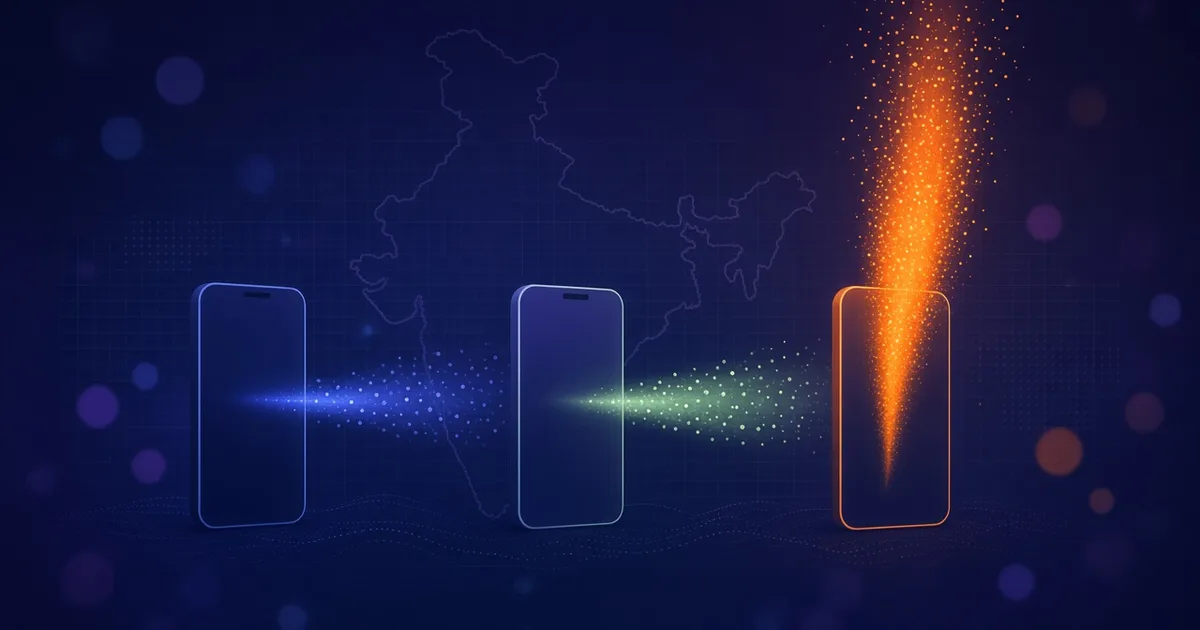
For most of the last two years, the story of AI in India has been told with one name. ChatGPT became the default way millions of Indians first tried a chatbot, and by early November OpenAI's India head was telling The Economic Times that India had become ChatGPT's largest market in the world by weekly users. New app store estimates released on 16 November suggest that the story now has a second, fast moving character.
According to market intelligence firm Sensor Tower, Anthropic's Claude was downloaded more than 15 times as often in India in the July to September quarter as in the same quarter a year earlier. Over the same period, ChatGPT downloads fell 21%, and Google's Gemini downloads fell 29%. The figures were reported by The Times of India, The Economic Times, YourStory and Inc42.
What the numbers say
The download chart is only half of it. Sensor Tower also tracks what people spend inside apps bought through Apple's App Store and Google Play. On that measure Claude climbed two places to third in India's app spending rankings for the quarter, ahead of Instagram and YouTube. Its in-app purchase revenue in India was more than 15 times what it was a year earlier, in line with its download growth.
ChatGPT is still well ahead in absolute terms. It remained the most downloaded app in India and ranked second for in-app spending, behind only Google One. Its India in-app revenue rose 70% year on year even as fewer people installed it, which suggests existing users are paying more rather than new users arriving. Gemini showed a similar pattern, with revenue up 44% despite the drop in downloads.
On a quarter on quarter basis the gap is narrower but points the same way. Claude's in-app revenue grew 75% from April to June, ChatGPT's grew 61%, and Gemini's fell 31%. "Claude outpaced Gemini and ChatGPT in download and in-app purchase revenue growth in India in Q3/26," Sensor Tower senior insights analyst Abe Yousef said, as quoted by The Times of India.
Why growth rates can mislead
A 15 fold jump sounds dramatic, but a multiple says nothing about the starting point. If Claude's India base a year ago was small, even a modest number of new installs would produce a huge ratio. ChatGPT, by contrast, is already India's most downloaded app, so a 21% fall in new downloads in one quarter can coexist with a growing and paying user base. None of the reports give absolute download counts, and Sensor Tower's figures are estimates rather than company disclosures.
There are two more caveats worth keeping in mind. First, the spending data only covers payments made through the two app stores. Subscriptions bought directly on a website, which is common for AI tools used at work, are not counted, so real spending on all three services is likely higher. Second, Google One sits at the top of the spending chart, but it bundles cloud storage with Google's AI plans, so it is not possible from this data to separate how much Indians pay for Gemini specifically.
Monetisation is the real story
The more interesting signal is that downloads and revenue are starting to tell different stories. For ChatGPT and Gemini, fewer installs but higher in-app revenue looks like a market that is moving from curiosity to habit, where the people who stay are willing to pay. That matters in a country where cheap or free plans have been the main way AI companies have competed for users.
For Claude, both lines are rising together, which looks more like a product still in its land grab phase in India. Our earlier reporting on OpenAI's India push noted that its local user base had doubled since January 2026 and that it was leaning on voice, Hindi and low cost plans to go wider. Claude's climb shows that a second global assistant can win paying Indian users quickly, even without being the default.
What OpenAI is doing next
OpenAI is not standing still. On 17 November YourStory reported that Pragya Misra, OpenAI's first hire in India in 2024 and until now its head of strategy and global affairs in the country, will lead business development for India and South Asia. In a LinkedIn post quoted by YourStory, she said she would focus on building partnerships that help businesses transform with AI, bring the technology to millions more people, and build the infrastructure needed to support that growth. YourStory noted that OpenAI has said it has more than 100 million weekly users in India.
The shift from consumer reach to business partnerships is telling. If downloads are flattening, the next phase of competition in India is likely to be fought in enterprise deals, developer tools and payments rather than in app store rankings alone.
What to watch
Three things will show whether this quarter was a blip or a turning point. The first is whether Claude's quarter on quarter revenue growth holds up once the novelty wears off. The second is whether ChatGPT's download decline continues or reverses as it pushes cheaper plans and Indian language features. The third is web subscriptions, which these numbers do not capture and which may matter more than app store spending for professional users. For now, the clearest takeaway is that India's AI app market is no longer a one horse race, and that paying users, not just installs, are becoming the scoreboard.